
Excellent Sheep PDF: A Comprehensive Overview (Updated 11/23/2025)
Finding a legitimate “Excellent Sheep” PDF requires caution; numerous sources offer downloads, but verifying authenticity is crucial to avoid malware or copyright issues.
Alternative formats like eBooks and audiobooks provide convenient access to William Deresiewicz’s critique of elite education, offering flexibility beyond a traditional PDF.
Beware of unauthorized downloads, as they pose risks; explore official publisher websites or reputable eBook retailers for safe and legal access to the full text.
Published in 2014, William Deresiewicz’s “Excellent Sheep” swiftly ignited a crucial conversation surrounding the pressures and pitfalls within the American elite education system. The book isn’t merely a critique of college admissions, but a broader examination of how societal values and expectations shape young minds, often to their detriment.
Deresiewicz, a former professor at Yale, draws upon his firsthand experiences to expose the “hereditary meritocracy” that dominates admissions, where privilege and relentless striving overshadow genuine intellectual curiosity. He argues that students are molded into “excellent sheep”—highly accomplished, yet lacking in critical thinking, individuality, and a true sense of purpose.
The work functions as a manifesto, an exposé, and a cultural critique, challenging the conventional wisdom surrounding success and urging a reevaluation of educational priorities. It’s a provocative read, prompting reflection on the long-term consequences of prioritizing achievement over authentic self-discovery.
The Author: William Deresiewicz

William Deresiewicz is an American essayist, critic, and former professor of English at Yale University. His background significantly informs the arguments presented in “Excellent Sheep,” lending the book considerable weight and authenticity. He resigned from his tenured position at Yale in 2014, partially due to his disillusionment with the university’s priorities and the pressures placed upon students.
Deresiewicz’s writing frequently explores themes of higher education, culture, and the search for meaning in a contemporary world. He is known for his sharp observations and willingness to challenge established norms. Prior to “Excellent Sheep,” he authored “A Jane Austen Guide to Life” and numerous essays published in prominent magazines.
His perspective isn’t that of an outsider, but of someone deeply embedded within the elite academic sphere, making his critique all the more compelling and insightful. He offers a nuanced understanding of the system’s complexities and its impact on individuals.
Core Argument: The Miseducation of the American Elite
Deresiewicz argues that elite universities, while seemingly providing exceptional education, fundamentally miseducate the American elite. He contends that the relentless pursuit of perfection—grades, accolades, and prestigious admissions—stifles critical thinking, genuine passion, and moral development.
The focus on external validation creates students who are skilled at performing, but lack internal compasses and a sense of purpose. This system, he posits, produces “excellent sheep”—highly accomplished individuals who are remarkably conformist and lack the courage to challenge the status quo.
“Excellent Sheep” isn’t a condemnation of intelligence, but a critique of a system that prioritizes achievement over character, and conformity over individuality, ultimately hindering the potential of its students.
The Problem: The Elite Admissions Rat Race
Deresiewicz portrays college admissions as a fiercely competitive “rat race,” driven by a hereditary meritocracy and fueled by parental pressures for perfect academic records.
The Hereditary Meritocracy
Deresiewicz argues that the elite admissions process has morphed from an old aristocratic system into what he terms a “hereditary meritocracy.” This isn’t based on genuine merit, but rather on advantages passed down through generations – access to superior schooling, test preparation, and cultural capital.
The book highlights how wealth and privilege create a self-perpetuating cycle, where children of successful, educated parents are overwhelmingly favored in admissions. This system, while appearing fair on the surface, effectively replicates existing social inequalities, limiting opportunities for students from less privileged backgrounds.
Essentially, it’s a system where “merit” is often predetermined, creating a landscape where striving for excellence feels less about individual achievement and more about maintaining inherited status.
Pressure from Parents and Counselors
“Excellent Sheep” meticulously details the intense pressure exerted on students by parents and guidance counselors, beginning early in their academic careers. This pressure isn’t necessarily malicious, but stems from a deeply ingrained belief that admission to an elite university is the sole pathway to success and happiness.
Deresiewicz describes a “conveyor belt” where students are relentlessly pushed towards perfect grades, impressive extracurriculars, and high standardized test scores, often at the expense of genuine intellectual curiosity and personal well-being. Counselors, rather than fostering individual exploration, often prioritize college rankings and admission rates.
This creates a climate of anxiety and conformity, stifling creativity and independent thought, ultimately shaping students into what the author calls “excellent sheep.”
The Pursuit of Perfection & Grades
Deresiewicz argues that the relentless pursuit of perfection and high grades has become the defining characteristic of the modern elite student experience. This isn’t about genuine learning, but about achieving a quantifiable metric of success – the GPA – that dictates future opportunities.
“Excellent Sheep” highlights how this obsession with grades fosters a culture of anxiety, stress, and a fear of failure. Students are incentivized to prioritize easy A’s over challenging coursework that might spark intellectual passion, leading to a superficial understanding of subjects.
The author contends that this system produces students who are skilled at performing, but lack the critical thinking skills and intrinsic motivation necessary for true innovation and fulfillment.
The Role of Standardized Testing
Deresiewicz sharply criticizes the overwhelming importance placed on standardized tests – SAT and ACT – within the college admissions process. He views these tests not as accurate measures of potential, but as gatekeepers reinforcing existing inequalities and perpetuating the “hereditary meritocracy.”

“Excellent Sheep” details how students are funneled into expensive test preparation courses, further widening the gap between those who can afford to game the system and those who cannot. This creates a self-fulfilling prophecy where privilege begets higher scores, and higher scores beget elite opportunities.
The author argues that standardized tests prioritize rote memorization and test-taking strategies over genuine intellectual curiosity and creativity, ultimately hindering the development of well-rounded individuals.
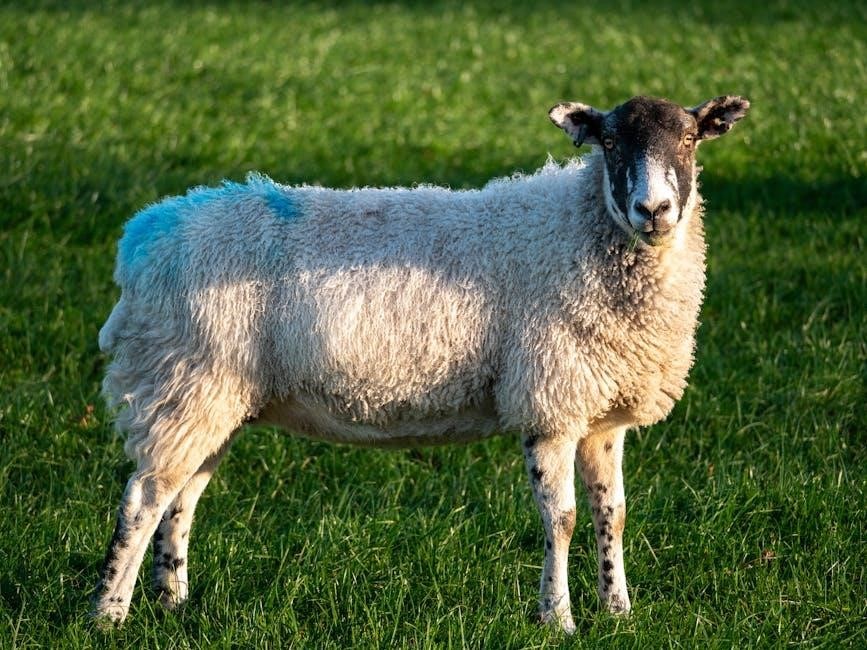
The Consequences: What Happens to “Excellent Sheep”?
“Excellent Sheep” reveals that these highly-achieving students often lack critical thinking, purpose, and individuality, resulting in emotional distress and conformity within elite institutions.
Lack of Critical Thinking Skills
Deresiewicz argues that the relentless pursuit of grades and accolades, fostered by the elite admissions process, actively stifles critical thinking abilities in students. “Excellent Sheep” details how these individuals become adept at performing for the system – mastering the art of pleasing teachers and admissions committees – rather than genuinely engaging with ideas.
This emphasis on external validation cultivates a mindset of conformity, discouraging independent thought and intellectual risk-taking. Students learn to prioritize what is rewarded, often sacrificing intellectual curiosity and the courage to challenge conventional wisdom. The book suggests that the very institutions designed to cultivate intellect inadvertently produce individuals who are remarkably unequipped to think for themselves.
Consequently, these “excellent sheep” struggle with complex problem-solving and lack the capacity for nuanced judgment, hindering their ability to contribute meaningfully to society.
Emotional and Psychological Impact
“Excellent Sheep” meticulously outlines the significant emotional and psychological toll exacted by the hyper-competitive environment of elite education. Deresiewicz highlights the pervasive anxiety, depression, and feelings of inadequacy experienced by students relentlessly pressured to achieve perfection.
The constant striving for external validation fosters a fragile sense of self-worth, deeply contingent on accomplishments rather than intrinsic value. This creates a breeding ground for impostor syndrome and a fear of failure that can be debilitating. The book details how this pressure cooker atmosphere often leads to burnout and a profound sense of emptiness, despite outward success.
Ultimately, the pursuit of excellence, ironically, undermines students’ emotional well-being and hinders their ability to lead fulfilling lives.
The Absence of Purpose and Passion
Deresiewicz’s “Excellent Sheep” argues that the relentless focus on achievement within elite institutions actively stifles the development of genuine purpose and passion in students; The system prioritizes external metrics – grades, test scores, prestigious internships – over internal exploration and the cultivation of individual interests.
Students, conditioned to chase accolades, often lack a clear understanding of their own values or what truly motivates them. This results in a generation of highly skilled individuals who are remarkably directionless, lacking a compelling vision for their lives beyond career advancement.
The book suggests this absence of intrinsic motivation contributes to a pervasive sense of dissatisfaction and a feeling of being unfulfilled, despite achieving conventional success.
Conformity and Lack of Individuality
“Excellent Sheep” posits that the elite educational system fosters a culture of profound conformity, actively discouraging independent thought and genuine individuality. The pressure to fit a pre-defined mold – the “excellent sheep” – leads students to suppress their unique perspectives and passions in favor of adhering to institutional expectations.
Deresiewicz argues that this emphasis on sameness stifles creativity and critical thinking, producing graduates who are adept at following rules but lack the courage to challenge the status quo. The system rewards those who excel at performing, rather than those who genuinely innovate.
This conformity extends beyond academic pursuits, impacting students’ personal lives and their ability to forge authentic identities.

The Book’s Structure and Style
“Excellent Sheep” is described as “an odd jumble,” blending manifesto, exposé, and cultural criticism within a concise, roughly 200-page format, offering a broad scope.
“An Odd Jumble” — A Critical Assessment of the Book’s Form
Critics acknowledge that William Deresiewicz’s “Excellent Sheep” doesn’t adhere to a conventional structure, labeling it “an odd jumble.” Despite its relatively brief length – barely exceeding 200 pages – the book ambitiously attempts to function simultaneously as a passionate manifesto, a revealing exposé of the elite admissions process, a guide towards personal tranquility, and a comprehensive work of cultural criticism.
This multifaceted approach, while intellectually stimulating, can feel disjointed to some readers. The book’s form reflects Deresiewicz’s own frustration with the rigid systems he critiques, perhaps intentionally mirroring the lack of cohesion he perceives within elite education itself. However, this unconventional structure may also hinder the book’s overall impact, preventing a more focused and streamlined argument from fully resonating with its audience.
Manifesto, Exposé, and Cultural Criticism
“Excellent Sheep” operates on multiple levels, functioning as a compelling manifesto urging students to reclaim their individuality and resist the pressures of conformity. Simultaneously, it serves as a scathing exposé, meticulously detailing the high-stakes, often soul-crushing, college admissions rat race and its detrimental effects on young people.
Beyond these elements, the book delivers a sharp critique of American culture, questioning the values that prioritize achievement and status over genuine purpose and passion. Deresiewicz doesn’t simply lament the system; he dissects the societal forces that perpetuate it, offering a broader commentary on the anxieties and expectations that define modern life. This layered approach elevates “Excellent Sheep” beyond a mere critique of education, positioning it as a significant work of cultural analysis.
The Book’s Length and Scope
“Excellent Sheep”, despite its concise length of just over 200 pages, tackles an expansive and deeply complex subject matter. This brevity contributes to its accessibility, allowing readers to quickly engage with Deresiewicz’s central arguments without feeling overwhelmed by academic jargon or exhaustive detail.
However, the book’s limited scope is also a point of critical discussion, with some observers noting its “odd jumble” of ideas. Despite this, Deresiewicz manages to cover a remarkable amount of ground, from the historical evolution of elite admissions to the psychological toll exacted on students. The book’s focus remains tightly centered on the American elite educational system, offering a focused, if somewhat narrow, perspective on broader societal issues.
Relevance Beyond College Students
“Excellent Sheep” extends beyond higher education, impacting high school and even elementary curricula, revealing systemic pressures on students and the broader educational landscape.
Implications for High School Education
Deresiewicz’s critique profoundly impacts how we view high school education, exposing the early roots of the “excellent sheep” phenomenon. The relentless pursuit of perfection, driven by parental expectations and counselor guidance, begins long before college applications.
High schools often mirror the college admissions rat race, prioritizing grades and standardized test scores over genuine intellectual curiosity and personal development. This creates a pressure cooker environment where students are incentivized to conform rather than explore their passions.
The book suggests a need for high schools to foster critical thinking, creativity, and a sense of purpose, rather than simply preparing students to check boxes for elite institutions. A shift in focus is vital to cultivate well-rounded individuals.
Ultimately, addressing the issues raised in “Excellent Sheep” requires a fundamental re-evaluation of educational priorities at the secondary level.
Impact on Elementary School Students
While “Excellent Sheep” primarily focuses on higher education, its implications extend surprisingly far down the educational pipeline, even reaching elementary school students. The pressure to achieve, though less overt, begins to manifest early on through competitive academics and extracurricular activities.
Parents, influenced by the college admissions landscape, may inadvertently instill a performance-oriented mindset in their young children, prioritizing achievement over exploration and play; This can stifle creativity and intrinsic motivation.
The book implicitly calls for a re-evaluation of early childhood education, advocating for a learning environment that nurtures curiosity, fosters a love of learning, and prioritizes social-emotional development over early academic rigor.
Protecting children’s natural inclination to learn and explore is crucial to prevent the creation of future “excellent sheep.”
The Broader Educational System
“Excellent Sheep” doesn’t merely critique elite institutions; it exposes systemic flaws within the entire American educational system. The relentless focus on standardized testing and quantifiable metrics permeates all levels, from primary school to university.
This emphasis on external validation cultivates a culture of conformity and discourages independent thought. The book suggests that the pursuit of “excellence” has become narrowly defined, prioritizing grades and accolades over genuine intellectual curiosity.
Deresiewicz argues for a fundamental shift in educational philosophy, advocating for a system that values critical thinking, creativity, and ethical reasoning—qualities often sacrificed in the pursuit of academic prestige.
Ultimately, the book challenges us to reconsider the purpose of education itself.

Criticisms and Reception of “Excellent Sheep”

Reception generally agreed with Deresiewicz’s depiction of the admissions process, acknowledging the intense pressure and bleak atmosphere within elite education, despite institutional defenses.
Agreement with the Description of the Admissions Process
Numerous reviewers and commentators have voiced strong agreement with William Deresiewicz’s central claim: that the contemporary college admissions process has devolved into a relentless, high-stakes competition. The book accurately portrays the pervasive anxiety and pressure experienced by students striving for acceptance into elite institutions.
Evidence supporting this assertion is readily available, demonstrating a clear trend towards increasingly competitive applications and a focus on extracurricular achievements alongside academic performance. The “rat race” described in Excellent Sheep resonates with the experiences of countless families navigating the college application landscape.
Critics acknowledge the book’s success in highlighting the detrimental effects of this system, including the erosion of genuine intellectual curiosity and the prioritization of conformity over individuality. The book’s insights have sparked important conversations about the purpose of higher education.
The Bleak and Soulless Scene of Elite Education
Deresiewicz paints a stark picture of life within elite universities, characterizing it as a “bleak and soulless scene” where genuine intellectual exploration is stifled by a culture of conformity and careerism. He argues that institutions actively perpetuate this environment, reassuring students that their anxieties are normal and their paths predetermined.
This atmosphere, according to the book, discourages critical thinking and independent thought, fostering a sense of alienation and purposelessness among students. The emphasis on prestige and future earning potential overshadows the pursuit of knowledge for its own sake.
The author contends that university leaders, rather than challenging the status quo, actively reinforce it, prioritizing institutional rankings and financial stability over the well-being and intellectual development of their students.
The Role of Institutional Leaders
Deresiewicz sharply criticizes the role of college presidents and deans, asserting they actively maintain the problematic system described in “Excellent Sheep.” Rather than fostering genuine intellectual curiosity, they prioritize institutional prestige, rankings, and financial health.
He argues these leaders reassure students that the anxieties and pressures they face are normal, effectively silencing dissent and reinforcing the existing, flawed structure. They present a façade of support while upholding a system that prioritizes outcomes over education.

This complicity, according to the book, stems from a fear of jeopardizing their positions and the institutions they lead, perpetuating a cycle of conformity and hindering meaningful change within elite education.
Finding and Accessing the “Excellent Sheep” PDF
Secure PDF access requires vigilance; legitimate sources include publisher sites and reputable eBook platforms, avoiding risks associated with unauthorized downloads and potential malware.
Legitimate Sources for PDF Downloads
Locating a trustworthy PDF of “Excellent Sheep” necessitates prioritizing legal and secure avenues. Directly visiting the publisher’s official website – Simon & Schuster – is the most reliable starting point; they may offer the PDF for purchase or preview excerpts.
Reputable eBook retailers like Amazon Kindle, Google Play Books, and Apple Books frequently stock digital versions, including potential PDF compatibility depending on your device. These platforms ensure copyright compliance and offer a safe download experience.
University libraries with digital collections may also provide access to the book in PDF format for enrolled students or affiliated researchers. Checking your institution’s online resources is highly recommended. Avoid third-party websites promising free downloads, as these often harbor malware or violate copyright laws.
Potential Risks of Unauthorized Downloads
Downloading a “Excellent Sheep” PDF from unofficial sources carries significant risks. These websites frequently host malware, viruses, and spyware, potentially compromising your device and personal data. Such downloads often violate copyright laws, exposing you to legal repercussions and supporting illegal activities.
Compromised PDFs can contain hidden malicious code designed to steal sensitive information like passwords, financial details, or browsing history. The quality of illegally obtained PDFs is often poor, featuring formatting errors, missing pages, or unreadable text.
Furthermore, supporting unauthorized distribution undermines the author’s work and the publishing industry. Prioritize legitimate sources to ensure a safe, legal, and high-quality reading experience. Protect your digital security and respect intellectual property rights by avoiding these risky downloads.
Alternative Formats: eBook and Audiobook
Beyond the PDF format, “Excellent Sheep” is readily available as an eBook, offering a convenient and portable reading experience on various devices like tablets, smartphones, and e-readers. eBooks often feature adjustable font sizes and built-in dictionaries, enhancing readability and comprehension.
For those who prefer auditory learning, the audiobook version provides an engaging way to absorb Deresiewicz’s insights while commuting, exercising, or multitasking. Professional narration brings the text to life, offering a different perspective on the author’s arguments.
Choosing an eBook or audiobook from authorized retailers ensures a legitimate copy and supports the author. These formats often include interactive features and are readily accessible, providing flexible options for engaging with the book’s content.