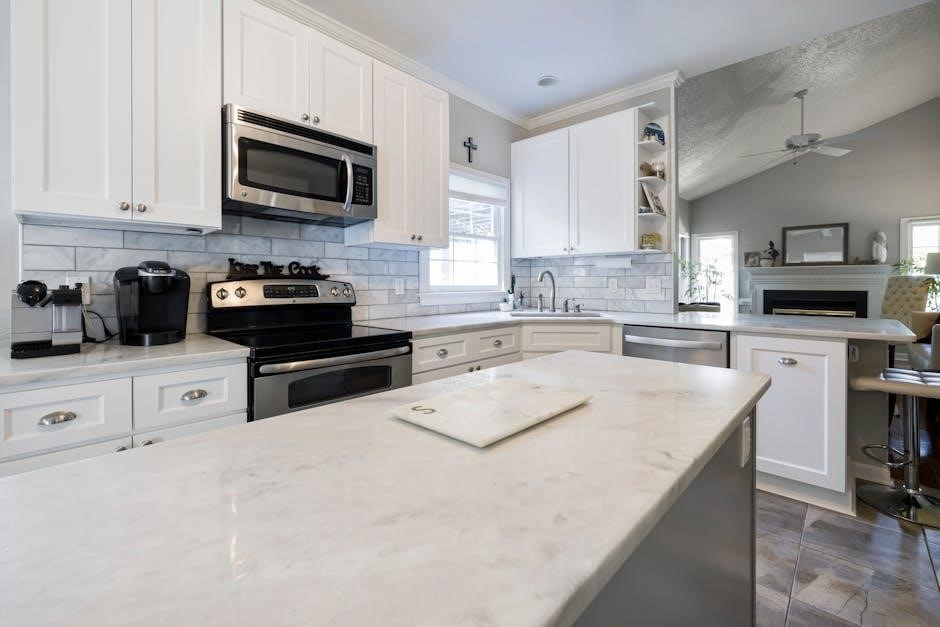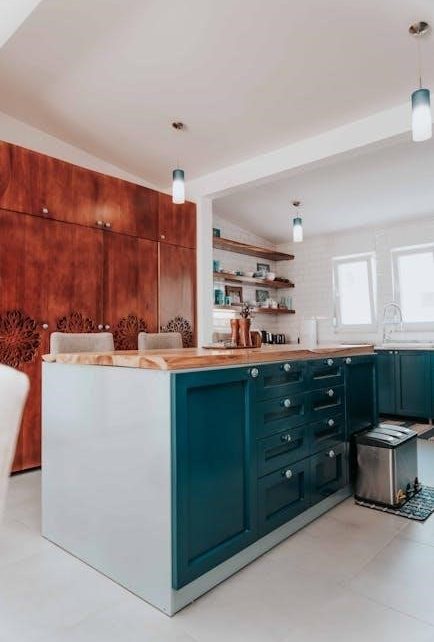
Navigating cabinet knob placement involves balancing aesthetics and functionality; size, proportion, and positioning are key for visual harmony and ease of use in your kitchen.
Understanding Knob Size & Proportion
Selecting the right knob size is crucial for a harmonious kitchen design. A knob that’s too small can appear flimsy and difficult to grip, diminishing the overall quality feel of your cabinetry. Conversely, an overly large knob can look disproportionate, overwhelming the cabinet door or drawer front.
Proportion is key; consider the scale of your cabinets and the overall style of your kitchen. Larger kitchens often benefit from slightly larger knobs, while smaller spaces may require more delicate, smaller options. Careful consideration ensures a balanced and visually appealing result, enhancing both the aesthetic and functional aspects of your kitchen.
Standard US Knob Sizing
In the United States, standard cabinet knobs generally range between 1 and 2 inches in diameter. This size provides a comfortable grip for most users while maintaining a visually balanced appearance on standard-sized cabinet doors and drawers. These dimensions strike a balance between functionality and aesthetics, offering a subtle yet effective hardware solution.
Smaller “micro” knobs are also gaining popularity, particularly in modern kitchen designs, offering a minimalist look. However, larger knobs, exceeding 2 inches, are sometimes used on larger cabinets or to make a bold design statement. Ultimately, the ideal size depends on personal preference and the overall kitchen style.
Impact of Knob Size on Aesthetics
The size of your cabinet knobs significantly impacts the overall aesthetic of your kitchen. A knob that’s too small can appear flimsy and lack visual weight, while an overly large knob might look disproportionate and overwhelming on a smaller cabinet door. Consider the scale of your kitchen and cabinets when selecting knob sizes.
Smaller knobs tend to create a more subtle and refined look, ideal for modern or minimalist designs. Larger knobs can add a touch of traditional charm or become a focal point in a more eclectic kitchen. Careful consideration ensures the knobs complement, not detract from, the overall design.
Visual Balance & Functionality
Achieving visual balance with cabinet knob placement is crucial for a harmonious kitchen design. Incorrect positioning can disrupt the flow and make cabinets appear awkward or difficult to use. Consider how the knobs interact with other kitchen elements, like countertops and backsplashes.
Functionality is equally important. Knobs should be easy to grip and turn, regardless of their placement. Ensure sufficient space around the knob for comfortable hand access. A well-placed knob enhances both the look and usability of your cabinets, contributing to a more enjoyable kitchen experience.
Placement on Cabinet Doors
Standard practice dictates placing cabinet knobs 2 to 3 inches from the top of the door. This provides a comfortable reach and a visually appealing proportion for most cabinet styles. However, this isn’t a rigid rule; adjustments can be made based on door design and personal preference.
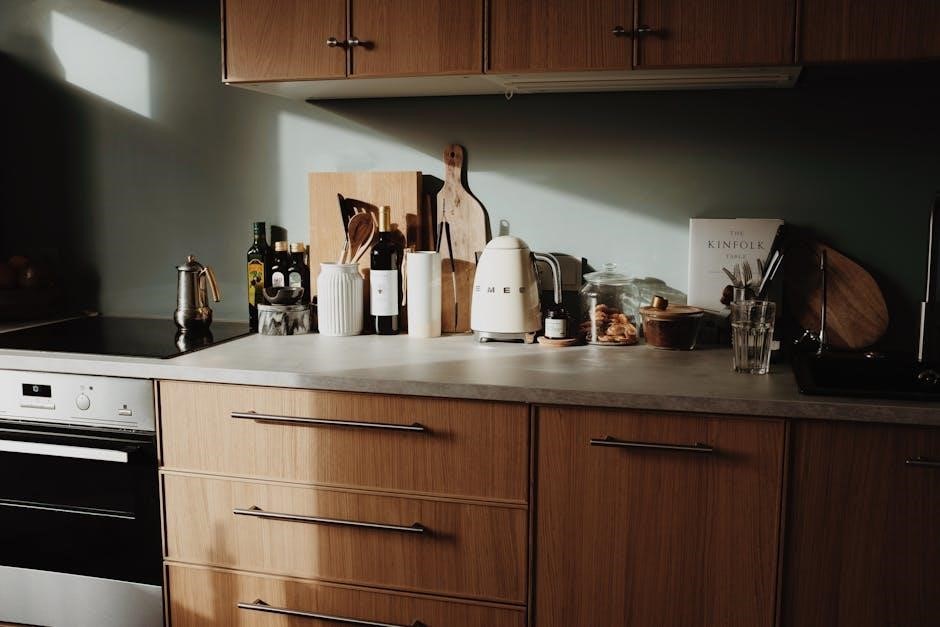
For modern, flat-panel cabinets, a slightly lower placement – around 1.5 inches – can create a more contemporary look. The Mountain House Kitchen project demonstrated this, utilizing smaller, low-profile knobs. Remember to consider the knob’s size and shape when determining the optimal placement for your doors.
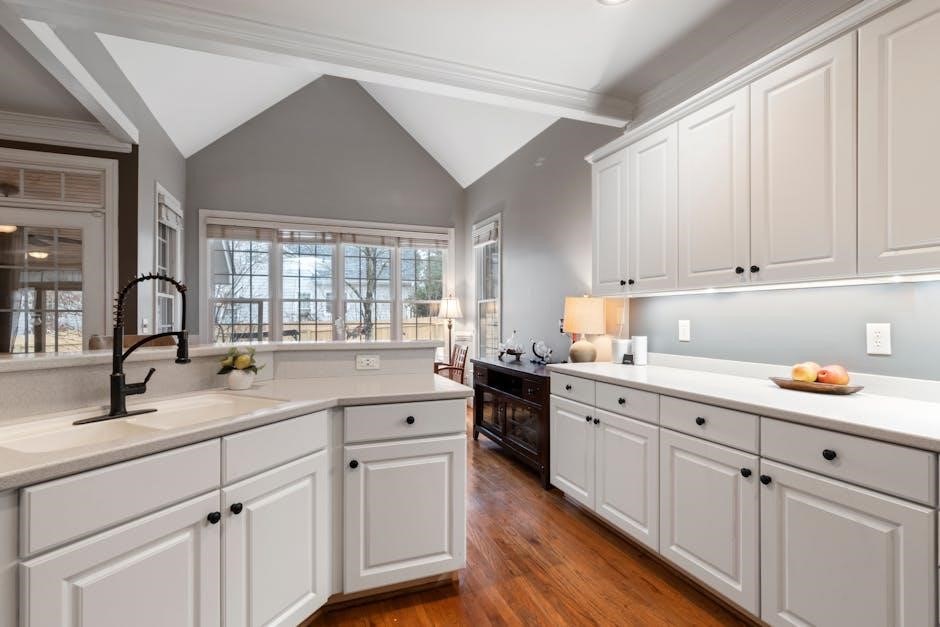
Standard Placement: 2-3 Inches from Top
The 2-3 inch rule is a widely accepted guideline for cabinet knob placement on doors. This measurement, taken from the top edge of the door, offers a balance between aesthetics and functionality, ensuring comfortable access. It works well with traditional cabinet styles, like shaker doors, providing a classic look.
This positioning generally aligns with natural hand placement, making opening and closing cabinets intuitive. However, it’s crucial to visually assess this distance on your cabinets, as variations in door height and style can influence the ideal spot. Consider it a starting point for refinement.
Adjustments for Modern Styles (e.g., Flat Panel)
Modern cabinet designs, particularly those with flat panels, often benefit from adjusted knob placement. The clean lines of flat-panel cabinets can appear unbalanced with standard 2-3 inch spacing. A slightly closer placement – around 1.5 inches – can create a more proportional and contemporary aesthetic.
This adjustment is especially effective when using smaller, lower-profile knobs (micro knobs). These knobs complement the minimalist style, and closer placement prevents them from looking lost on the larger, flat surface. Remember to consider the overall kitchen design and personal preference when making these adjustments.
Mountain House Kitchen Example: 1.5 Inch Placement
In the Mountain House Kitchen project, a departure from standard placement proved highly effective. Knobs were positioned approximately 1.5 inches from the top of the door and 1 inch inward, a closer proximity than the typical 2-3 inch recommendation.
This decision was driven by specific design elements. The chosen knobs were “micro” knobs – modern, with a lower profile. This closer placement balanced the smaller size and complemented the overall aesthetic. It demonstrates how adapting standard guidelines can yield a more harmonious and visually appealing result, tailored to the kitchen’s unique style.
Considerations for Knob Profile (Micro Knobs)
When selecting micro knobs – smaller, lower-profile hardware – placement requires careful consideration. Their subtle nature means they can easily get “lost” if positioned too far from the cabinet edge.
Closer placement often works best with micro knobs, creating a more deliberate and balanced visual impact. This is exemplified in the Mountain House Kitchen, where 1.5-inch placement proved ideal. Adjustments are crucial; a larger knob might overwhelm the space, while a micro knob needs proximity to be noticed and functional. Prioritize visual weight and ease of grip.
Placement on Drawers
Standard drawer knob placement centers vertically on the panel, offering a balanced aesthetic. However, for enhanced visual appeal, consider dividing the drawer into thirds. This technique allows for strategic knob positioning in the left and right thirds, creating a more dynamic look.

For drawers exceeding 24 inches in width, adding a second knob is highly recommended. This ensures easy access and maintains proportional balance. Remember, dividing the drawer into thirds and utilizing the outer sections for knob placement is a helpful tip for achieving optimal aesthetics and functionality.
Standard Drawer Placement: Centered Vertically
Traditionally, cabinet knobs on drawers are centered vertically, aligning them directly in the middle of the drawer panel. This approach provides a classic and symmetrical appearance, suitable for various kitchen styles. It’s a straightforward method ensuring ease of access and a balanced visual weight.
This centered placement works particularly well for standard-sized drawers, offering a clean and uncluttered look. While functional and aesthetically pleasing, it’s important to remember that this is a starting point. Exploring alternative placements, like dividing the drawer into thirds, can elevate the design.
Dividing Drawers into Thirds
A modern approach to drawer knob placement involves dividing the drawer face into thirds, both horizontally and vertically. This technique creates a more dynamic and visually interesting design compared to traditional centering. It’s particularly effective for larger drawers, adding a touch of sophistication.
By measuring the drawer and identifying these thirds, you can strategically position the knobs in the left and right sections. This method offers a balanced aesthetic, especially when using smaller, more contemporary knobs. It’s a subtle yet impactful change that can elevate the overall kitchen design.
Knob Placement in Thirds (Left & Right)
Once you’ve divided the drawer face into thirds, strategically position the cabinet knobs within the left and right sections. This creates a balanced and visually appealing arrangement, moving away from the conventional centered placement. This technique works exceptionally well with drawers that are not overly wide, maintaining proportionality.
Consider the knob’s size when implementing this method; smaller knobs often look best within these thirds. This approach adds a contemporary flair, enhancing the overall aesthetic of your kitchen cabinetry. It’s a simple adjustment that yields a significant design impact, offering a fresh perspective on drawer hardware.
Drawers 24 Inches Wide or Wider: Adding a Second Knob
For drawers spanning 24 inches or more in width, a single knob often appears insufficient and can compromise functionality. To address this, we strongly recommend incorporating a second knob to ensure easy access and a balanced visual aesthetic. This addition prevents the drawer from appearing disproportionate and enhances usability.
Employ the “thirds” method discussed previously; position one knob in the left third and the other in the right third of the drawer face. This symmetrical arrangement provides optimal grip points and contributes to a more refined look. It’s a practical solution for larger drawers, improving both form and function.
Wall Cabinet Knob Placement
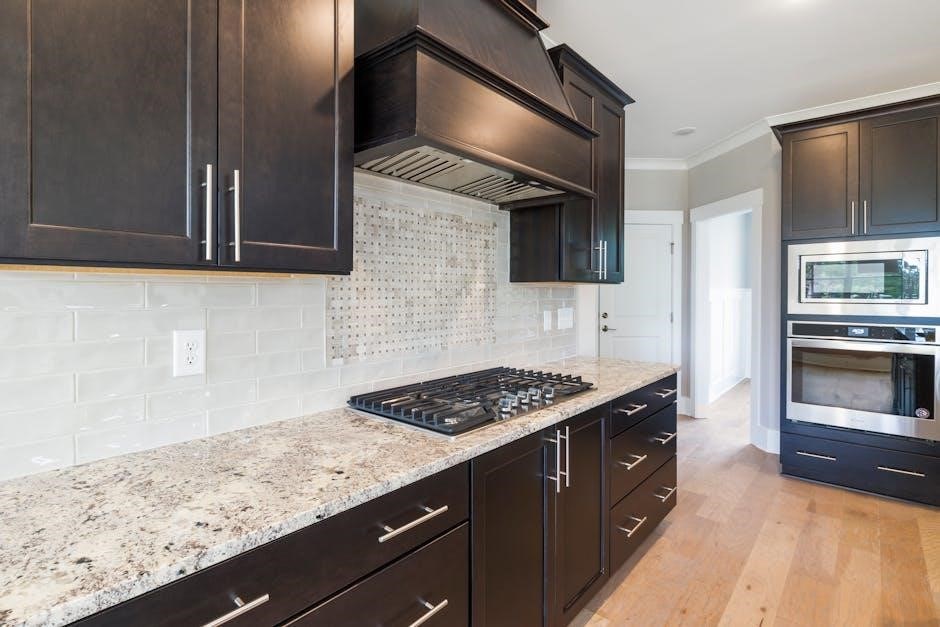
When considering wall cabinets – those positioned above counter space – a common and visually appealing approach is to place knobs approximately 2 to 3 inches from the lower corner of the door panel. This positioning offers a comfortable grip and maintains a balanced proportion relative to the cabinet size.
However, remember that personal preference reigns supreme! Feel free to adjust this measurement based on your individual taste and the overall kitchen design. Experimentation is encouraged to achieve the look that best complements your space. Ultimately, the goal is a harmonious blend of aesthetics and practicality.
Common Placement: 2-3 Inches from Lower Corner
For wall cabinets, a widely accepted standard dictates knob placement between 2 and 3 inches from the lower corner of the door panel. This measurement provides a visually balanced aesthetic, ensuring the knob doesn’t appear too high or too low on the cabinet door. It also offers a comfortable and accessible grip for opening and closing.
This guideline serves as a solid starting point, but remember that flexibility is key. Consider the size of your cabinets and the overall style of your kitchen when making your final decision. Minor adjustments can significantly impact the overall look and feel.

Personal Preference & Customization
While guidelines offer a strong foundation, ultimately, cabinet knob placement should reflect your personal taste and the unique character of your kitchen. Don’t hesitate to deviate from standard recommendations if it aligns better with your vision. Consider the flow of your kitchen and how you interact with the cabinets daily.
Experiment with different placements to see what feels most natural and visually appealing. Factors like cabinet style, knob size, and overall kitchen design all play a role. Customization allows you to create a space that is both functional and uniquely yours.
Knob Styles & Overall Kitchen Design
The style of your cabinet knobs should complement the overall aesthetic of your kitchen. Traditional kitchens often benefit from classic knob designs, while modern spaces may call for sleek, minimalist hardware. Consider the finish – brass, nickel, or matte black – and how it coordinates with other elements.
Subtle knobs (1-2 inches) offer a less prominent look, ideal if you prefer a more understated style. Choosing all knobs creates a cohesive, subtle appearance, avoiding the visual weight of pulls. Align knob style and placement with your kitchen’s design for a harmonious result.
Knobs vs. Pulls: A Design Choice
The decision between knobs and pulls significantly impacts kitchen aesthetics. Pulls generally suit larger cabinets and drawers, offering a more substantial grip. Knobs, conversely, provide a simpler, often more traditional look, particularly effective on smaller doors.
Using all knobs creates a subtle, unified appearance, while mixing knobs and pulls can introduce visual interest. Consider the functionality – pulls are easier to grasp, especially with full hands. Ultimately, the choice depends on your style preference and the kitchen’s overall design, balancing form and function.
Using All Knobs for a Subtle Look
Opting for all knobs delivers a consistently understated elegance to your kitchen. Standard knobs, ranging from 1-2 inches in diameter, offer a more subtle presence than pulls, preventing them from dominating the design. This approach works exceptionally well if you prefer hardware to blend seamlessly with the cabinetry.
If you don’t want your cabinet hardware to be the star, choosing knobs across all doors and drawers creates a cohesive, less assertive aesthetic. This is a fantastic choice for minimalist or traditional kitchens where a quiet sophistication is desired, allowing other elements to shine.
Working with a Designer
A professional designer, like those at CliqStudios, offers invaluable expertise in cabinet knob selection and placement. They provide personalized, one-on-one consultation to understand your style, kitchen layout, and functional needs.
Benefit from their knowledge of current trends and classic principles, ensuring a harmonious design. A designer can expertly guide you in selecting the perfect size and style of knobs, considering factors like cabinet door profiles and overall kitchen aesthetics. They streamline the process, saving you time and preventing costly mistakes.
Benefits of Professional Consultation (CliqStudios)
CliqStudios offers a dedicated design experience, simplifying your cabinet hardware choices. Their professionals provide tailored guidance, ensuring your knobs complement your kitchen’s overall aesthetic and functionality.
Receive expert advice on size selection, preventing disproportionate looks or flimsy feels. Benefit from personalized placement recommendations for doors and drawers, optimizing both visual balance and ease of use. CliqStudios streamlines the process, offering a stress-free path to a beautifully finished kitchen. They help you avoid costly errors and achieve a cohesive, professional result.
Selecting the Perfect Size & Style
Choosing the right cabinet knob size and style is crucial for a harmonious kitchen design. Standard knobs typically range from 1-2 inches in diameter, offering a subtle appearance compared to pulls.
Consider the scale of your cabinets; too small a knob can feel flimsy, while too large can look disproportionate. Micro knobs offer a modern, low-profile aesthetic, often suited for flat-panel cabinets. Think about your overall kitchen style – traditional, modern, or transitional – and select knobs that complement it. If you prefer a subtle look, using all knobs can minimize hardware prominence.
Installation Considerations
Proper cabinet knob installation ensures both aesthetic appeal and secure functionality. Begin with basic installation steps, carefully marking your predetermined placement positions for consistency.
Prioritize secure attachment; use appropriate screws and consider the cabinet door/drawer material to prevent splitting. Double-check knob alignment before fully tightening screws. A CliqStudios designer can offer guidance on selecting the correct hardware for your specific cabinets. Regularly maintain knob security by periodically tightening screws to prevent loosening over time, ensuring lasting enjoyment of your kitchen’s design.
Cabinet Knob Installation Basics
Installing cabinet knobs is a straightforward process, but attention to detail is crucial. First, carefully mark the pre-determined placement on each cabinet door or drawer front, ensuring consistent spacing.
Use a drill bit slightly smaller than the screw diameter to create pilot holes, preventing wood splitting. Insert the screws through the holes in the cabinet door/drawer and into the knob, tightening until snug – avoid over-tightening. Ensure each knob is securely attached and aligned properly for optimal functionality and a polished look.
Ensuring Secure Attachment
A secure attachment is paramount for long-lasting cabinet hardware. Always use screws of appropriate length and gauge for your cabinet material; too short, and they won’t hold, too long, and they’ll protrude. Consider using wood glue in addition to screws for extra stability, especially in softer woods.
Periodically check the tightness of the knobs, as they can loosen over time with frequent use. If screws strip, use longer screws or wood filler to create a secure anchor point. Proper installation prevents wobbling and ensures your knobs remain firmly in place.
Advanced Placement Techniques
Beyond standard guidelines, elevate your kitchen’s design with nuanced knob placement. For traditional cabinets, slightly adjusting placement – perhaps a quarter-inch – can refine the look. Experiment with asymmetrical arrangements on drawers, particularly wider ones, for a modern touch.
Consider the “golden ratio” when positioning knobs, aiming for visually pleasing proportions. For flat-panel cabinets, a closer-to-the-edge placement often looks best. Don’t be afraid to break the rules, but maintain consistency throughout the kitchen for a cohesive aesthetic.
Elevating Traditional Cabinet Looks
Traditional kitchens benefit from subtle adjustments to knob placement. A slight shift – even a quarter-inch – can refresh the appearance of shaker-style cabinets. Consider a slightly lower placement than the standard 2-3 inches, creating a more grounded feel. Focus on symmetry and balance to enhance the classic aesthetic.
Experiment with knob profiles; micro knobs offer a modern twist while maintaining a traditional base. Ensure consistent spacing across all cabinets and drawers for a polished look. This simple change in placement can significantly elevate the overall design.
Simple Changes for a Modern Feel
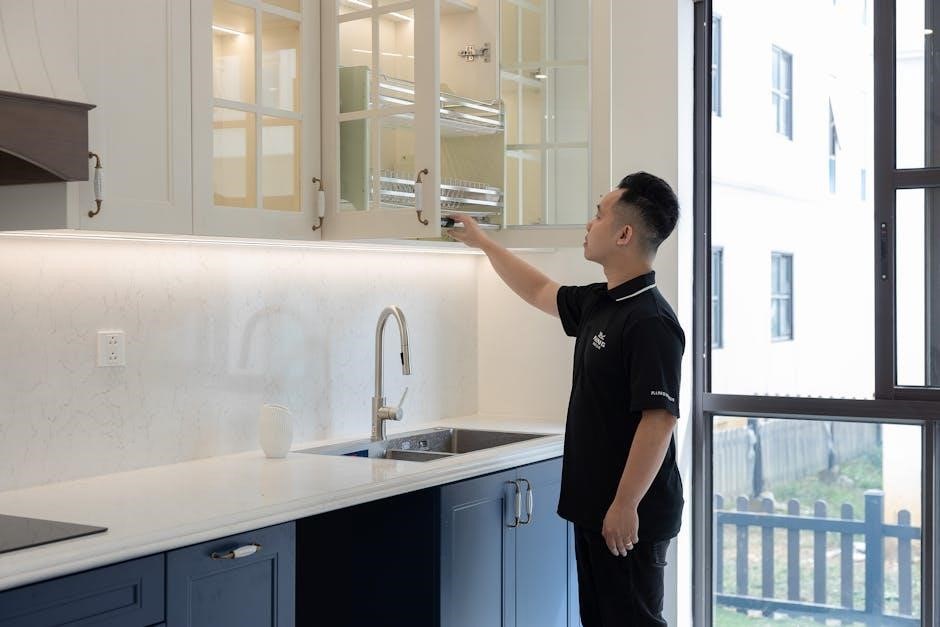
For modern kitchens, particularly those with flat-panel cabinets, deviate from traditional placement. Consider a closer knob position – like the 1.5-inch placement in the Mountain House Kitchen example – for a contemporary aesthetic. Pair this with micro knobs, which have a lower profile and a sleek appearance.
Embrace asymmetry and unconventional spacing to create visual interest. Focus on clean lines and minimalist hardware. These subtle adjustments can transform a traditional cabinet style into a modern statement, offering a fresh and updated look without a full renovation.
Measuring for Accurate Placement
Precise measurements are crucial for consistent and visually appealing knob placement. Begin by determining the ideal spot – typically 2-3 inches from the top for doors, or centered vertically for drawers. Use a tape measure and mark the positions lightly with a pencil.
For drawers, divide the panel into thirds to find optimal knob locations. Ensure measurements are identical across all cabinets and drawers to maintain balance. Double-check before drilling to avoid errors. Accurate placement elevates the overall look and functionality of your kitchen.
Tips for Achieving the Perfect Look
Consistency is paramount; maintain uniform spacing and height across all cabinets and drawers for a polished appearance. Consider the scale of your knobs relative to the cabinet size – smaller knobs suit modern designs, while larger ones complement traditional styles.
Don’t be afraid to experiment! Step back and assess the visual balance. For drawers, dividing into thirds offers a classic, balanced look. Remember personal preference matters; adjust placement to suit your taste and kitchen’s overall aesthetic.
Dividing Drawers for Optimal Aesthetics
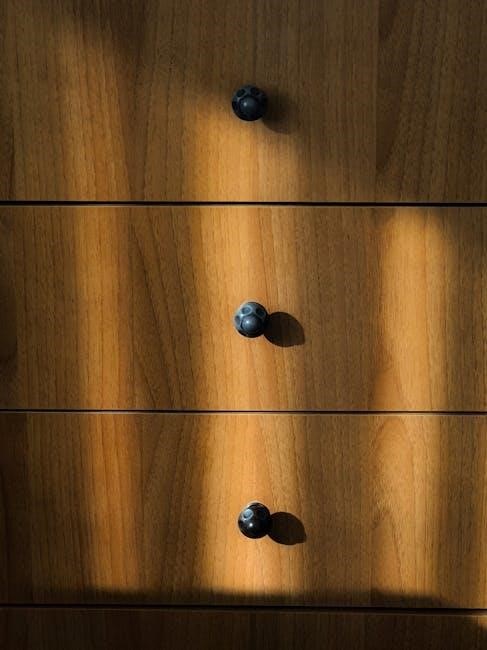
Visually splitting drawers into thirds is a cornerstone of balanced cabinet knob placement. Measure the drawer’s width accurately, then divide by three to pinpoint ideal knob positions. Place knobs in the left and right thirds, creating a symmetrical and pleasing arrangement.
This technique works exceptionally well for standard-sized drawers, offering a classic aesthetic. For wider drawers (24 inches or more), consider adding a third knob centered for enhanced functionality and visual appeal. Adjust placement slightly based on knob size to maintain proportionality.
Considering Drawer Width
Drawer width significantly impacts optimal cabinet knob placement strategies. Standard drawers benefit from vertically centered knobs, positioned in the panel’s middle. However, wider drawers (24 inches or greater) often necessitate a second knob for both functionality and aesthetic balance.
Dividing the drawer into thirds provides a guideline; placing knobs in the left and right thirds creates visual harmony. Remember to adjust knob placement slightly based on the knob’s size to maintain proportionality. Carefully assess the drawer’s dimensions to determine the most visually appealing and practical arrangement.
Adjusting Placement Based on Knob Size
Knob size directly influences the ideal placement for a balanced look. Smaller “micro” knobs, often favored in modern designs, can be positioned closer to the cabinet edge – like the 1.5-inch placement in the Mountain House Kitchen example. Larger knobs generally require more space around them, benefiting from the standard 2-3 inch guidelines.
Consider the knob’s profile; a lower-profile knob allows for closer placement without appearing crowded. Always prioritize visual proportionality, ensuring the knob complements the cabinet door or drawer’s dimensions. Fine-tune the placement to achieve a harmonious aesthetic.
Importance of Consistent Placement
Maintaining consistent knob placement throughout your kitchen is crucial for a polished, professional appearance. Inconsistencies can create a jarring visual effect, disrupting the overall flow and design. Whether you opt for the standard 2-3 inch rule or a customized approach, apply it uniformly across all cabinet doors and drawers.
Double-check measurements during installation to ensure accuracy. A template can be incredibly helpful for replicating placement. Consistent placement demonstrates attention to detail and elevates the overall quality of your kitchen’s aesthetic.
Final Checks & Adjustments
After installing all cabinet knobs, perform a thorough visual inspection. Step back and assess the overall balance and symmetry of your kitchen’s hardware. Ensure each knob is securely fastened and aligned correctly – any wobbling or misalignment should be addressed immediately.
Open and close each cabinet and drawer to confirm the knobs are comfortable to grip and don’t interfere with functionality. Make minor adjustments as needed to achieve a perfect look and feel. These final touches will ensure lasting satisfaction with your cabinet hardware;
Maintaining Knob Security
Regularly check the tightness of your cabinet knobs to prevent loosening over time, especially with frequent use. A simple quarterly inspection can save you from frustrating repairs later. If a knob feels wobbly, tighten the screw carefully – avoid over-tightening, which could strip the screw hole.
For stripped screw holes, consider using longer screws or wood filler to provide a more secure anchor. Periodically clean the knobs and surrounding area to maintain their appearance and prevent corrosion. Proactive maintenance ensures your cabinet hardware remains both functional and aesthetically pleasing.